All roles/Deck and Bridge/Relief Captain
Deck and Bridge
Relief Captain
A Relief Captain takes command of a yacht while the permanent captain is on leave, sick or between hires, keeping the vessel legal, safe and running to the owner's programme.

- Department
- Deck and Bridge
- Reports to
- Owner or Yacht Manager
- Yacht size
- 30m to 100m+
- Contract
- Short-term freelance, days to months
- Starting pay
- €600 per day
What the job is
A Relief Captain steps in to run a yacht when the permanent captain is away. That might be two weeks of leave in August, a month of cover after surgery, or a gap while the owner hires a new master. You hold full legal command from the moment you sign on. The flag state, the insurers and the management company treat you exactly as they would the permanent captain.
The hard part is speed. You join a boat you may never have seen, with a crew who already have their routines and loyalties. Within a day you need to know the machinery, the safety management system, the guests' habits and the weak points in the hull or the team. A good handover note from the outgoing captain helps, but you still walk the boat, read the logs and ask questions until nothing surprises you.
Most of the job is keeping things as they were. You run the programme, sign the paperwork, approve spending, deal with marinas and agents, and handle guests. You do not rearrange the crew or rewrite the procedures. You hand back a boat in the same or better condition, with a clear written report, so the permanent captain picks up without a single loose end.
What makes a good one
- Fast, thorough handovers
- Calm command of an unfamiliar crew
- Close shiphandling in tight marinas
- Clear written reports to owners and managers
- Strong ISM and flag state knowledge
A day in the life
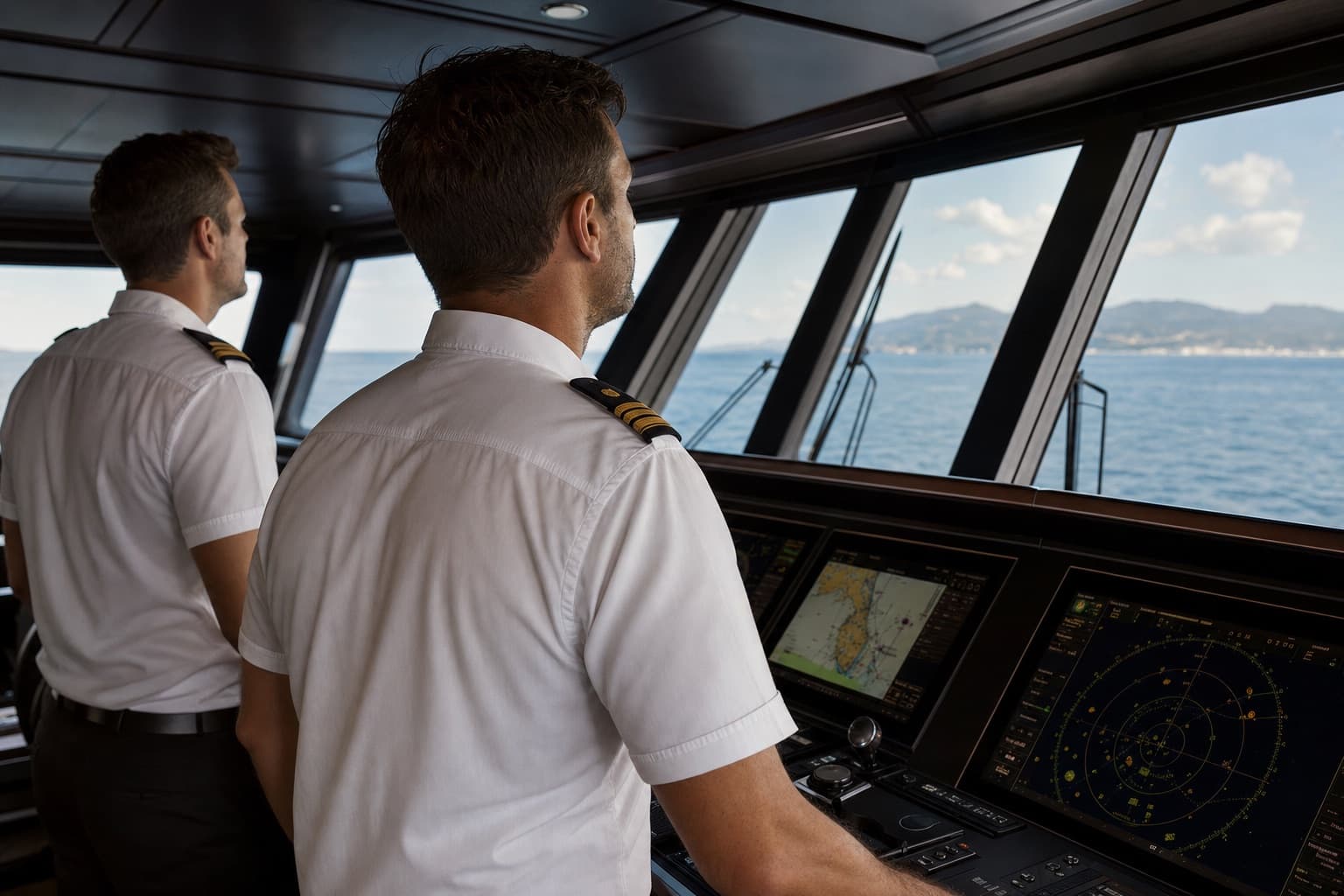
- 07:00Arrive at the berth and meet the outgoing captain for a two hour handover over coffee in the wheelhouse. Go through the handover file, open defects, budgets and the guest programme for the next ten days.
- 09:00Walk the boat from bow to stern with the Chief Engineer. Check the engine room, steering flat, fire systems, liferafts and any items on the defect list.
- 10:30Formally take command. Sign the official log, update the crew list and notify the management company and flag state contacts as the SMS requires.
- 11:00Short all-crew meeting on the aft deck. Introduce yourself, confirm the programme stays as planned and agree who comes to you for what.
- 12:30Review the ship's certificates, ISM documents, last drill records and the passage plan for Ibiza. Check ECDIS charts are corrected and weather routing is in place.
- 14:30Run a fire and abandon ship drill so you see the crew working together and know where each person goes. Debrief with the Chief Officer afterwards.
- 16:00Call the yacht manager to go through cash on board, approved spending and the owner's preferences. Sign off two supplier invoices and confirm the fuel order.
- 18:00Meet the Chief Stewardess to go over the guest preference sheets and arrival times. Confirm tender plans and the restaurant booking ashore with the bosun.
- 20:00Write up your first-day notes and questions for the permanent captain. Do a final round of the decks and check the night watch is set before turning in.
Pay by country
Relief Captains are paid a day rate, not a monthly salary, for yachts of roughly 30m to 80m. Rates rise with tonnage, Master 3000gt command and short notice. Flights and travel are usually paid by the yacht, and you share in charter tips if guests are on board during your stint.
- France and Monaco
- €600 – 1,200 per day
- Spain
- €550 – 1,100 per day
- Italy
- €550 – 1,100 per day
- United Kingdom
- £500 – 1,000 per day
- USA (Florida)
- US$650 – 1,300 per day
- Caribbean
- US$650 – 1,300 per day
- UAE
- AED 2,400 – 4,800 per day
- Australia
- A$1,000 – 2,000 per day
- New Zealand
- NZ$1,100 – 2,100 per day
Required
- Master (Yacht) 500gt or 3000gt
- STCW Basic Safety Training
- ENG1 medical
- GMDSS GOC
- Medical Care
- Advanced Fire Fighting
- Ship Security Officer
- ECDIS
- HELM (Management)
Recommended
- Master (Yacht) 3000gt
- RYA Yachtmaster Ocean
- Type-specific ECDIS
- Proficiency in Survival Craft
Visas
- Schengen
- US B1/B2
- C1/D
- Australian MCV
Where it leads
Relief Captain jobs open now
Questions crew ask
Do I need to have been a permanent captain before doing relief work?
Usually, yes. Owners and managers want someone who has already held command, often for several years, because there is no time to learn on the job. Some Chief Officers with a Master ticket do their first relief stints on boats they already know.
How do I find relief work?
Most relief jobs come through recruitment agencies, management companies and captains you have worked with. Keep your CV, ticket copies and availability up to date, and be ready to fly out within 48 hours.
Can relief work lead to a permanent command?
Often it does. Owners who like how you ran the boat during cover may offer you the role when the captain leaves, or recommend you to other boats in the same fleet.