All roles/Dual roles/Mate / Engineer
Dual roles
Mate / Engineer
On a smaller yacht you are second in command on deck and the person who keeps the engines, generators and systems running. You stand watches, drive tenders and fix what breaks.
- Department
- Dual roles
- Reports to
- Yacht Captain
- Yacht size
- 24m to 45m
- Contract
- Seasonal or permanent
- Starting pay
- €4,500 per month
What the job is
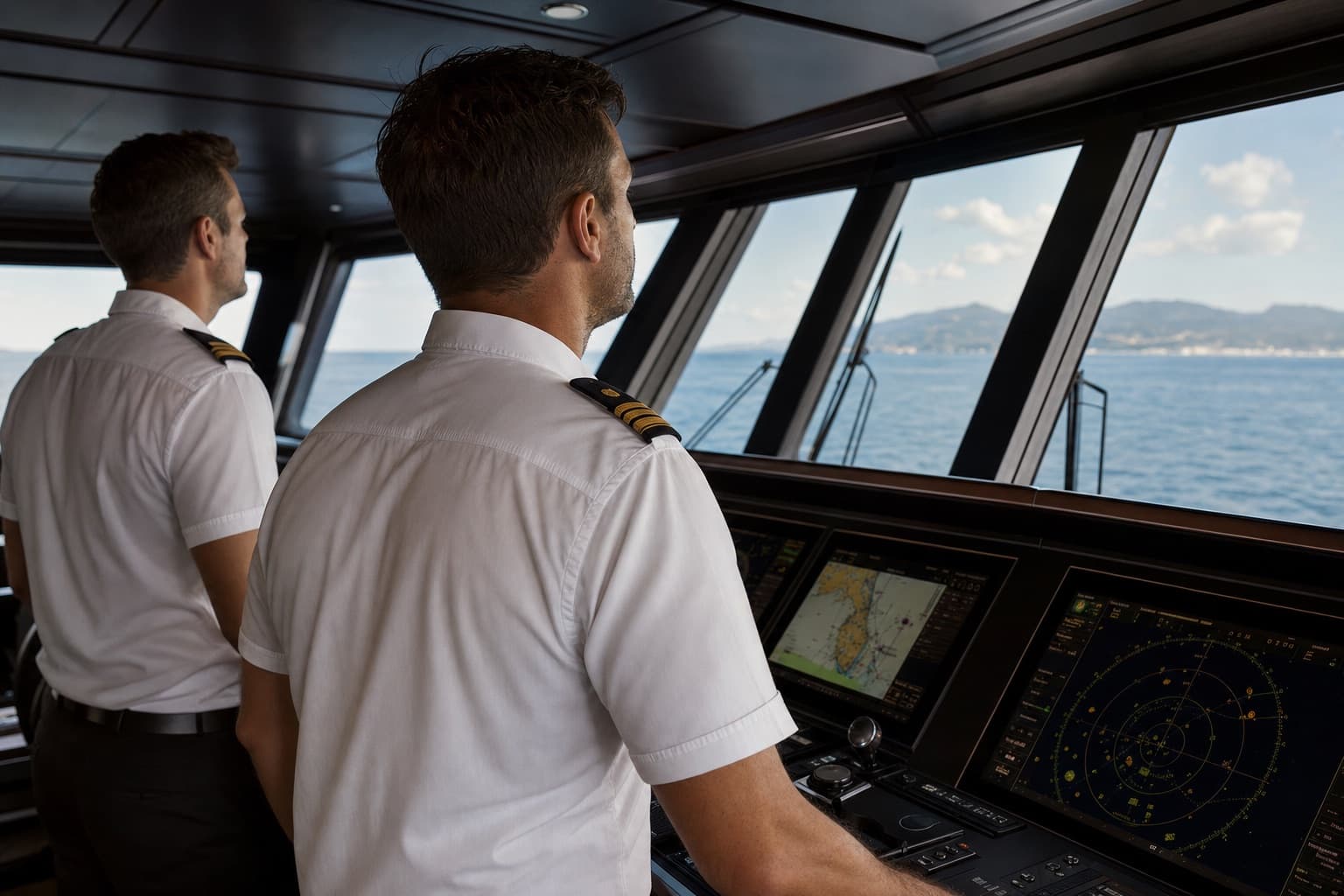
A Mate / Engineer is found on yachts too small to carry a separate chief officer and engineer, usually 24m to 45m with a crew of three to six. You are the captain's right hand on deck and the only technical person on board. That means you stand watches, plan passages with the captain, run the deck team on mooring and anchoring, and then go below to check the engine room before anyone else is up.
The engineering side covers daily checks on main engines and generators, oil and filter changes, watermaker and sewage plant upkeep, bilge and fuel management, air conditioning faults and the endless small jobs on pumps, heads and deck hardware. You keep the planned maintenance system and logs current, order spares and deal with contractors in port. When something fails mid charter, the guests and captain look to you for a fix that afternoon, not next week.
On deck you drive the tender, launch and recover water toys, lead washdowns and look after the varnish and gelcoat with the deckhand. You also take the wheel when the captain needs rest and cover as officer of the watch at anchor. The role suits someone who is happy with dirty hands one hour and guest facing the next, and who can prioritise calmly when both departments want them at once.
What makes a good one
- Diesel engine and generator maintenance
- Passage planning and watchkeeping
- Confident tender handling
- Fault finding on board systems
- Calm prioritisation under pressure
A day in the life
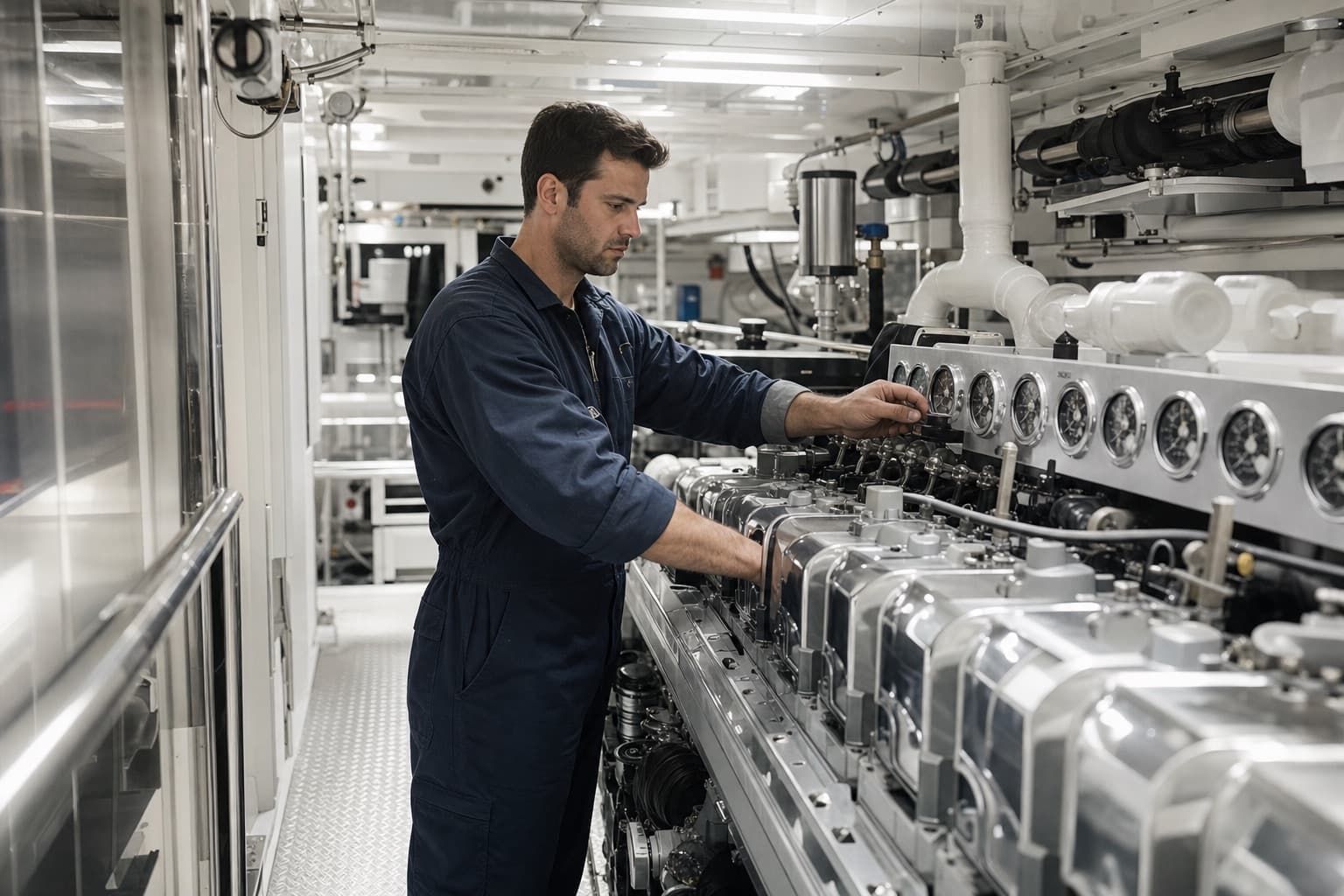
- 06:30Engine room rounds before guests wake. Check generator hours, oil levels, bilges, watermaker output and the overnight alarm log.
- 07:30Wash down the decks with the deckhand and dry the windows. Brief the captain on fuel, water and any faults found.
- 09:30Lift anchor with the captain on the bridge and you on the foredeck. Move the yacht to a quieter cove for the day.
- 10:30Launch the tender and jet skis, then run guests ashore for a beach walk. Stay on the radio while the deckhand watches the toys.
- 13:00A guest cabin air conditioning unit trips. Reset it, clean the strainer and note the fault in the maintenance log.
- 15:00Tender runs and toy supervision through the afternoon. Refuel the jet skis from the deck tank and rinse the gear.
- 18:30Recover the toys, re anchor for the night and set the anchor alarm. Check the generator load before dinner service starts.
- 20:00Run guests ashore for dinner in town and wait at the dock. Bring them back safely and secure the tender for the night.
- 23:30Final engine room check and anchor watch handover to the captain. Order a replacement strainer for delivery at the next port.
Pay by country
Monthly crew salary for yachts of 24m to 45m. Charter yachts usually add tips of 5 to 15 per cent of the charter fee, shared among crew.
- France and Monaco
- €4,500 – 6,500
- Spain
- €4,500 – 6,300
- Italy
- €4,500 – 6,300
- United Kingdom
- £3,900 – 5,600
- USA (Florida)
- US$5,000 – 7,200
- Caribbean
- US$5,000 – 7,200
- UAE
- AED 18,000 – 26,000
- Australia
- A$7,500 – 11,000
- New Zealand
- NZ$8,500 – 12,000
Required
- STCW Basic Safety Training
- ENG1 medical
- PDSD
- RYA Yachtmaster Offshore
- AEC 1 and 2
- RYA Powerboat Level 2
Recommended
- MEOL (Yacht)
- GMDSS GOC
- Medical First Aid
- Advanced Fire Fighting
- Proficiency in Survival Craft
- RYA PWC
Visas
- Schengen
- US B1/B2
- C1/D
Where it leads
Mate / Engineer jobs open now
Questions crew ask
Do I need to be a qualified engineer to get this job?
No, but you need AEC 1 and 2 at minimum and real hands on experience with diesel engines and generators. An MEOL (Yacht) makes you far more attractive and lets you sign as engineer on more yachts.
Is this a good route to becoming a captain?
Yes. You build sea time and command experience as mate while learning the technical side, which makes you a strong candidate for Captain / Engineer roles on small yachts.
How busy is it on charter?
Very. You cover two departments with a small crew, so expect long days and broken nights at anchor, balanced by good tips and time off between charters.