All roles/Engineering/Chief Engineer
Engineering
Chief Engineer
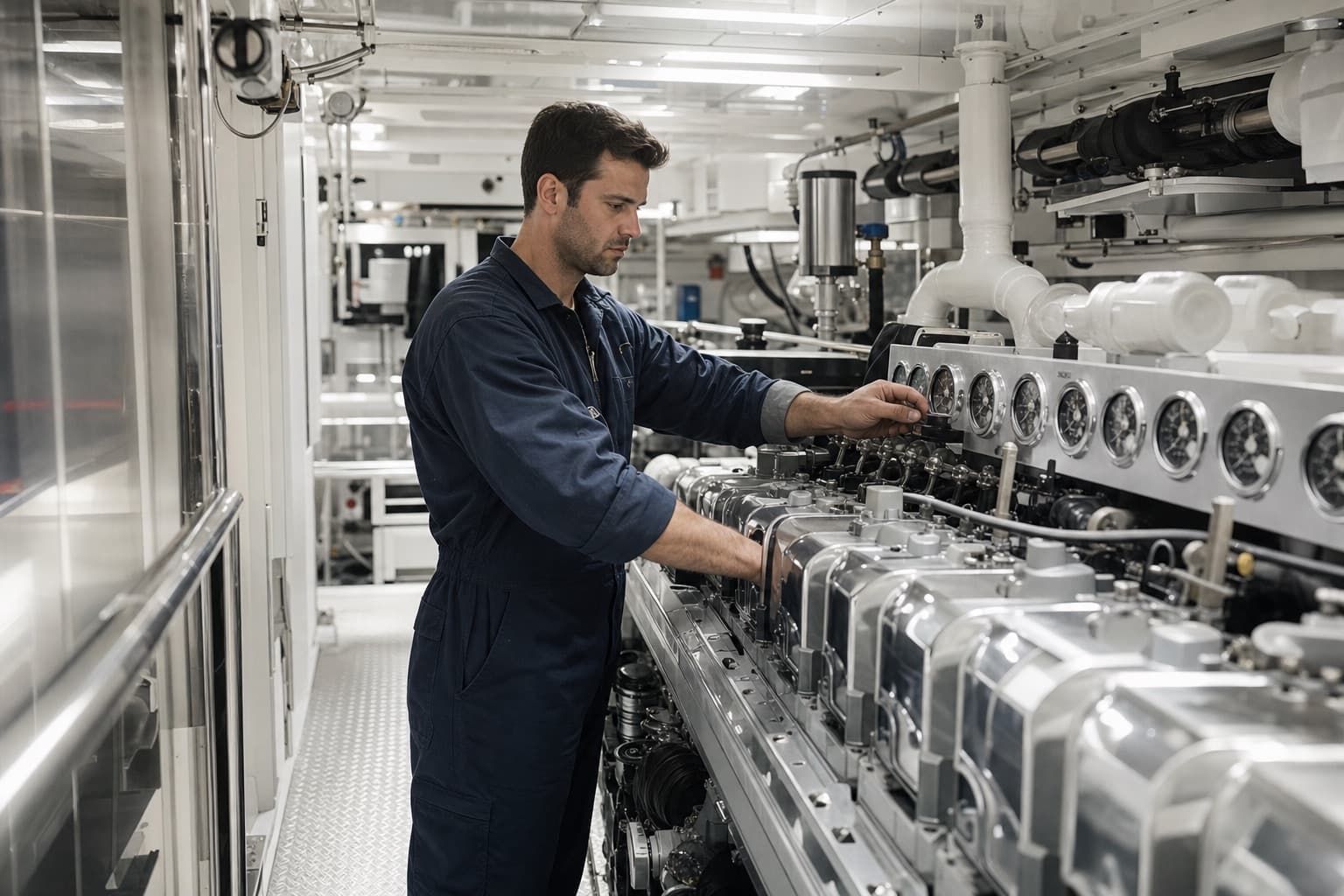
The Chief Engineer runs every machine on board, from main engines and generators to watermakers and air conditioning, keeping the yacht safe, legal and comfortable for guests.
- Department
- Engineering
- Reports to
- Yacht Captain
- Yacht size
- 40m to 150m+
- Contract
- Permanent, often on rotation
- Starting pay
- €9,000 per month
What the job is
You are responsible for every technical system on the yacht. That means main engines, generators, stabilisers, hydraulics, watermakers, sewage plant, fuel, HVAC and the electrics that run the guest areas. On smaller yachts you do much of the work yourself. On larger ones you lead a team of engineers and an ETO, plan their work and check it. If something stops working, the Captain looks to you first.
A big part of the job happens away from the engine room. You run the planned maintenance system, order spares, manage the engineering budget and keep records ready for flag, class and port state inspections. You work with the Captain and management company on survey schedules, ISM and MARPOL compliance, and yard periods. During a refit you are often the owner's eyes on the contractors, checking quality and pushing back on extra costs.
Guests never see most of what you do, but they notice the moment it fails. A warm cabin, a dead tender or a tripped galley breaker can spoil a charter. Good Chief Engineers prevent those problems through routine checks and steady planning, and fix them quietly when they happen. You also stand in for the Captain on technical decisions, and on many yachts you take part in passage planning, bunkering and crew safety drills.
What makes a good one
- Diesel and generator fault finding
- Planned maintenance and record keeping
- Budgeting and spares management
- Leading an engineering team
- Refit and contractor oversight
A day in the life
- 06:30Walk round the engine room with the night watch notes. Check generator loads, bilges, tank levels and the overnight alarm log.
- 07:30Coffee meeting with the Second Engineer and ETO. Hand out the day's tasks from the planned maintenance system and agree who covers guest calls.
- 08:30Captain's heads of department meeting. Confirm the move to a new anchorage at noon, fuel remaining and a water toy fault the deck team reported.
- 09:30Strip and clean a watermaker prefilter housing that is losing pressure, then log the job and parts used.
- 12:00In the engine control room for the passage. Start the mains, bring the stabilisers online and monitor temperatures until the anchor is down.
- 14:00Chief Stewardess reports a cabin running warm. Trace it to a sticking chilled water valve and swap it while guests are on the beach.
- 16:00Office time. Approve a spares order for the next MTU service, update the fuel report for management and reply to the class surveyor about next month's visit.
- 18:30Check the tender and jet ski fuel with the Bosun before evening runs ashore, then a last round of the plant before handing over to the evening watch.
- 21:00On call for the night. Phone by the bed, alarms routed to your cabin.
Pay by country
Monthly salary for a Chief Engineer on a 40m to 80m motor yacht. Yachts over 100m pay €15,000 to 22,000 or more. Rotation is common on larger yachts. Charter yachts add tips, often one to two months' salary over a busy season.
- France and Monaco
- €9,000 – 14,000
- Spain
- €8,500 – 13,500
- Italy
- €8,500 – 13,500
- United Kingdom
- £7,500 – 12,000
- USA (Florida)
- US$10,000 – 15,500
- Caribbean
- US$10,000 – 15,500
- UAE
- AED 37,000 – 57,000
- Australia
- A$16,000 – 24,000
- New Zealand
- NZ$17,500 – 26,500
Required
- STCW Basic Safety Training
- ENG1 medical
- MCA Y3, Y2 or Y1 Chief Engineer CoC (size and power dependent)
- HELM (Management)
- Advanced Fire Fighting
- Medical First Aid
- PDSD
Recommended
- Ship Security Officer
- Medical Care
- Engine manufacturer courses (MTU, Caterpillar, MAN)
- Refrigeration and HVAC qualifications
- RYA Powerboat Level 2
- Unlimited STCW III/2 engineering CoC
Visas
- Schengen visa
- US C1/D visa
- US B1/B2 visa
- Australian Maritime Crew Visa (MCV)
Where it leads
Chief Engineer jobs open now
Questions crew ask
Which ticket do I need to be Chief Engineer?
It depends on the yacht's tonnage and propulsion power. Y3 covers smaller yachts, Y2 and Y1 cover larger and more powerful ones, and the biggest yachts over 3000gt often want an unlimited STCW III/2 ticket.
Is rotation common for Chief Engineers?
Yes, most yachts over 60m offer rotation, usually 2:2 or 3:3 months. Smaller yachts more often hire on permanent contracts with set leave.
Can I move ashore after being a Chief Engineer?
Many do. Experience as Chief leads naturally to technical management, refit supervision or owner's representative work with a management company or shipyard.