All roles/Engineering/Engine Fitter
Engineering
Engine Fitter
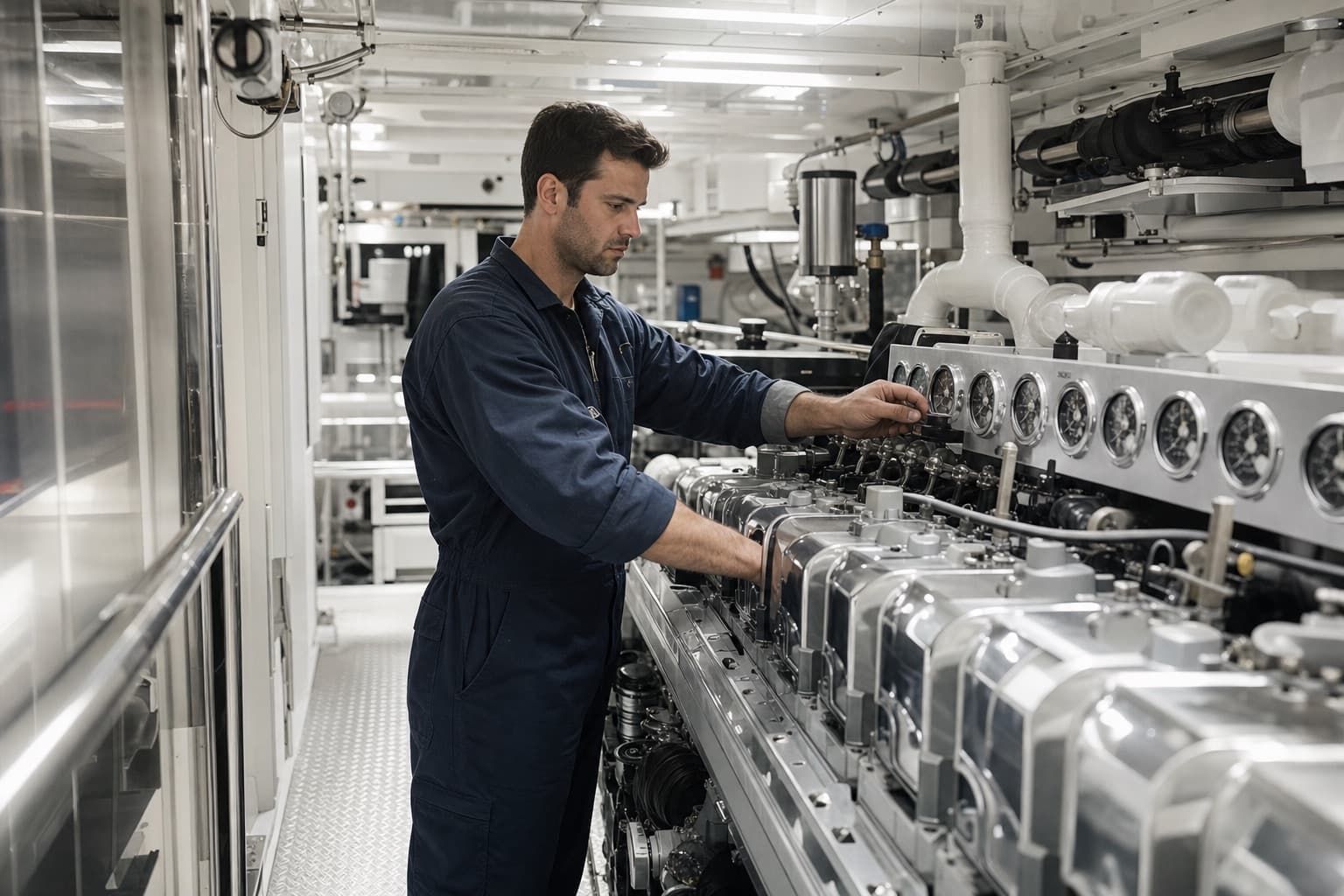
An Engine Fitter is the hands-on mechanical tradesperson in a large yacht's engine room. You strip, repair and rebuild machinery so the engineers can keep the boat running safely and on programme.
- Department
- Engineering
- Reports to
- Second Engineer
- Yacht size
- 70m+
- Contract
- Permanent or rotation
- Starting pay
- €3,500 per month
What the job is
An Engine Fitter is a skilled mechanic who works under the engineering officers on larger yachts. Where the Chief and Second Engineer plan the work, you do much of it with your hands. That means pulling pumps, changing seals, overhauling separators, rebuilding valves, machining small parts and fabricating brackets. The role exists mostly on yachts over 70m, where the machinery count is high enough to justify a dedicated tradesperson rather than asking watchkeeping engineers to do everything.
Most fitters come from a shoreside trade. Typical backgrounds are a marine or heavy diesel apprenticeship, commercial shipping, a dealer workshop for MTU, Caterpillar or MAN, or a refit yard. You bring workshop skills that a young yacht engineer may not yet have, such as precise measurement, welding, alignment and proper rebuild procedure. In return you learn the yacht systems, watchkeeping routines and the paperwork side through the planned maintenance system.
The work is heaviest in yard periods and between charters, when generators, stabilisers, watermakers and tender engines come apart. During guest trips you keep a lower profile, handling running repairs and helping with rounds while the boat must stay quiet and comfortable. Good fitters keep a tidy workshop, log every job properly and order the right spares before they are needed. Many use the role as a route into certified yacht engineering by adding AEC and Y4 tickets.
What makes a good one
- Diesel engine overhaul
- Pump and valve rebuilds
- Welding and fabrication
- Precise measurement and alignment
- Planned maintenance records
A day in the life

- 07:00Toolbox talk in the engine control room with the Second Engineer. Today's jobs are a generator top end, a leaking sea water pump and a seized tender davit valve.
- 07:30Isolate and lock out the sea water pump, then strip it on the workshop bench. Measure the shaft and wear ring and find the mechanical seal has failed.
- 09:30Fit a new seal and wear ring from stores, reassemble and return the pump to service. Log parts used and hours in the planned maintenance system.
- 10:30Start on the number two generator with the Third Engineer. Remove rocker covers, check valve clearances and change injectors to the manufacturer's schedule.
- 12:30Lunch in the crew mess, then a quick check on the generator coolant level before the afternoon.
- 13:15Box up the generator, run it on load and check temperatures, pressures and for leaks. Record readings for the Chief Engineer.
- 15:00Strip the davit hydraulic valve on deck with the Bosun's team standing by. Clean the spool, replace O rings and test the davit through its full travel.
- 17:00Fabricate and fit a small stainless bracket for a vibrating pipe run in the bilge. Clean the workshop and return tools to the shadow boards.
- 18:00Write up the day's jobs, flag low stock on injectors and seal kits and hand over to the duty engineer.
Pay by country
Monthly salary for crew on yachts of 70m and above. Pay rises with trade background, welding skills and engineering tickets. Charter tips are shared with the whole crew and can add a meaningful sum on busy charter yachts.
- France and Monaco
- €3,500 – 4,800
- Spain
- €3,500 – 4,800
- Italy
- €3,500 – 4,800
- United Kingdom
- £3,000 – 4,100
- USA (Florida)
- US$3,800 – 5,200
- Caribbean
- US$3,800 – 5,200
- UAE
- AED 14,000 – 19,000
- Australia
- A$5,800 – 8,000
- New Zealand
- NZ$6,400 – 8,800
Required
- STCW Basic Safety Training
- ENG1 medical
- Recognised mechanical or marine trade qualification
- AEC 1
Recommended
- AEC 2
- Y4 (Yacht engineering)
- MEOL (Yacht)
- PDSD
- Coded welding certificate
- Engine manufacturer training (MTU, Caterpillar, MAN)
Visas
- Schengen visa
- US B1/B2 or C1/D
- Australian MCV
Where it leads
Engine Fitter jobs open now
Questions crew ask
Do I need an engineering ticket to work as an Engine Fitter?
Not usually. Captains hire fitters for their trade skills, so a solid apprenticeship or workshop background plus STCW, ENG1 and AEC 1 is normally enough. Adding AEC 2 and Y4 makes you more useful and opens the move to Third Engineer.
Will I stand engine room watches?
Often, yes. Most fitters join the watch rota for rounds and checks, especially on passages, but the main focus remains maintenance and repairs.
How is this different from a Motorman?
A Motorman supports the engineers with cleaning, rounds and basic tasks. A fitter is a qualified tradesperson trusted to strip, rebuild and fabricate machinery to a high standard, and is paid accordingly.