All roles/Engineering/Technical Storekeeper
Engineering
Technical Storekeeper
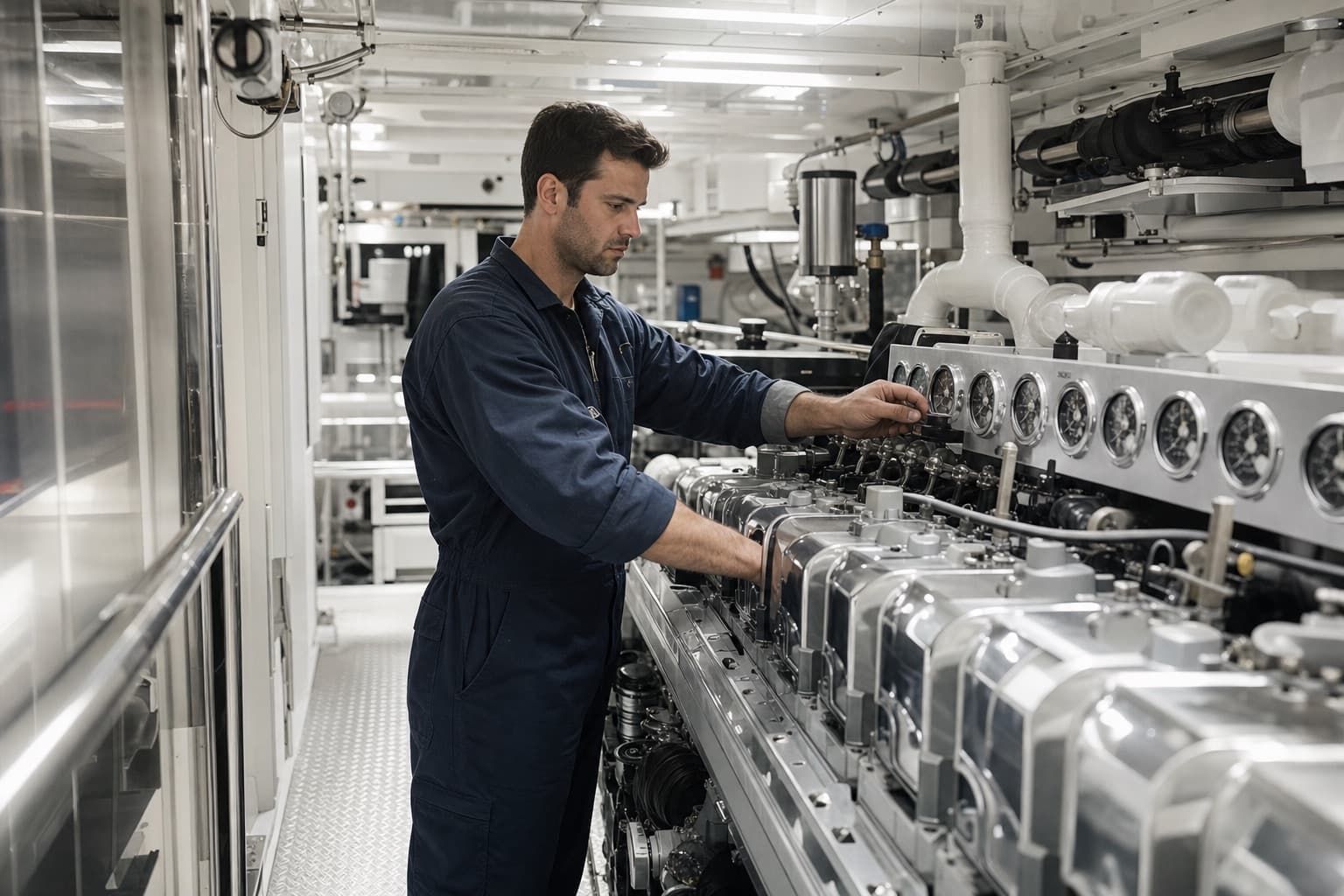
The Technical Storekeeper runs the engineering stores on a large yacht, tracking every spare, filter and consumable so the engineers have the right part on board when something fails at sea.
- Department
- Engineering
- Reports to
- Chief Engineer
- Yacht size
- 80m+
- Contract
- Permanent or rotation
- Starting pay
- €3,500 per month
What the job is
On yachts over about 80m the engine room carries thousands of spare parts, from main engine injectors to watermaker membranes and HVAC belts. The Technical Storekeeper owns that inventory. You receive, label, store and issue every item, keep stock levels right in the planned maintenance system, and make sure nothing critical runs out. When an engineer opens a job card, the part should already be on the shelf and logged.
Much of the day is admin. You raise purchase requests, chase suppliers, compare quotes and track shipments through agents and customs, often across several countries in one season. You record hazardous materials for the Inventory of Hazardous Materials, keep safety data sheets current and manage oils, chemicals and gases safely. On some yachts you also look after deck and interior technical spares, so you work closely with the Bosun and Purser as well as the engineers.
It suits someone organised and methodical who likes systems and is happy in overalls. You will move heavy boxes, tidy bilge stores and help in the engine room when needed, but your real value is accuracy. Good storekeepers save the yacht money, cut downtime and make audits and surveys painless. The job is also a practical way into engineering, as you learn the plant part by part and can work towards AEC tickets.
What makes a good one
- Inventory control and stock counts
- Planned maintenance software
- Purchasing and supplier management
- Shipping, customs and logistics
- Basic mechanical knowledge
A day in the life

- 07:00Join the engineers' morning meeting in the control room. Note the day's maintenance jobs and the parts each one needs.
- 07:45Pick and issue spares for the planned jobs, including filters for a generator service. Book them out in the maintenance software against each work order.
- 09:00Check overnight emails from suppliers and the agent in Palma. Update the shipment tracker for a pallet of stabiliser seals clearing customs.
- 10:30Run a cycle count on the electrical stores and correct two stock discrepancies. Reorder fuses and contactors that have dropped below minimum levels.
- 12:30Lunch in the crew mess, then a quick catch up with the Purser on invoices and cost codes for last month's orders.
- 13:30Receive a delivery by tender at the swim platform. Inspect, photograph and label each item, then stow it in the correct store and update locations.
- 15:30Update safety data sheets for a new batch of cleaning chemicals and add them to the hazardous materials register.
- 17:00Help the Second Engineer source an urgent pump part. Find a supplier who can ship to the next port and raise the order for Chief Engineer approval.
- 18:30Tidy the workshop and stores, secure everything for the night passage and send the Chief Engineer a short stock and orders report.
Pay by country
Monthly salary for crew on yachts of 80m+, usually paid in EUR or USD. Higher on larger yachts and for candidates with AEC tickets or maintenance software experience. Charter tips apply on charter yachts and are usually shared equally among crew.
- France and Monaco
- €3,500 – 5,000
- Spain
- €3,500 – 5,000
- Italy
- €3,500 – 5,000
- United Kingdom
- £3,000 – 4,300
- USA (Florida)
- US$3,800 – 5,400
- Caribbean
- US$3,800 – 5,400
- UAE
- AED 14,000 – 20,000
- Australia
- A$5,800 – 8,300
- New Zealand
- NZ$6,300 – 9,000
Required
- STCW Basic Safety Training
- ENG1 medical
- PDSD (Proficiency in Designated Security Duties)
Recommended
- AEC 1 (Approved Engine Course)
- AEC 2 (Approved Engine Course)
- CIPS procurement qualification
- Advanced Fire Fighting
- Proficiency in Survival Craft
Visas
- Schengen
- US B1/B2 or C1/D
- Australian MCV
Where it leads
- Oiler / Wiper
- Motorman
- Technical Storekeeper
- Third Engineer
- Second Engineer
- First Engineer
- Chief Engineer
Technical Storekeeper jobs open now
Questions crew ask
Do I need engineering experience to become a Technical Storekeeper?
Not always. Many come from shoreside logistics, warehousing or procurement, while others move across from deck or the engine room. A basic understanding of marine systems and experience with inventory software makes you far more hireable.
Which software should I learn?
Most large yachts use a planned maintenance and inventory system such as AMOS, IDEA Yacht or Deep Blue. Experience with any of them, plus strong Excel skills, is a real advantage at interview.
Can this role lead to becoming an engineer?
Yes. You learn the plant and its parts in detail, and many yachts will support you through AEC 1 and AEC 2 so you can move into a Third Engineer role and work towards your MCA Yacht engineering tickets.