All roles/Engineering/Engineering Cadet
Engineering
Engineering Cadet
An Engineering Cadet trains on board under qualified engineers, learning to run and maintain a superyacht's machinery while working towards a first MCA yacht engineering ticket.
- Department
- Engineering
- Reports to
- Chief Engineer
- Yacht size
- 50m+
- Contract
- Cadetship placement, sea and college phases
- Starting pay
- €1,800 per month
What the job is
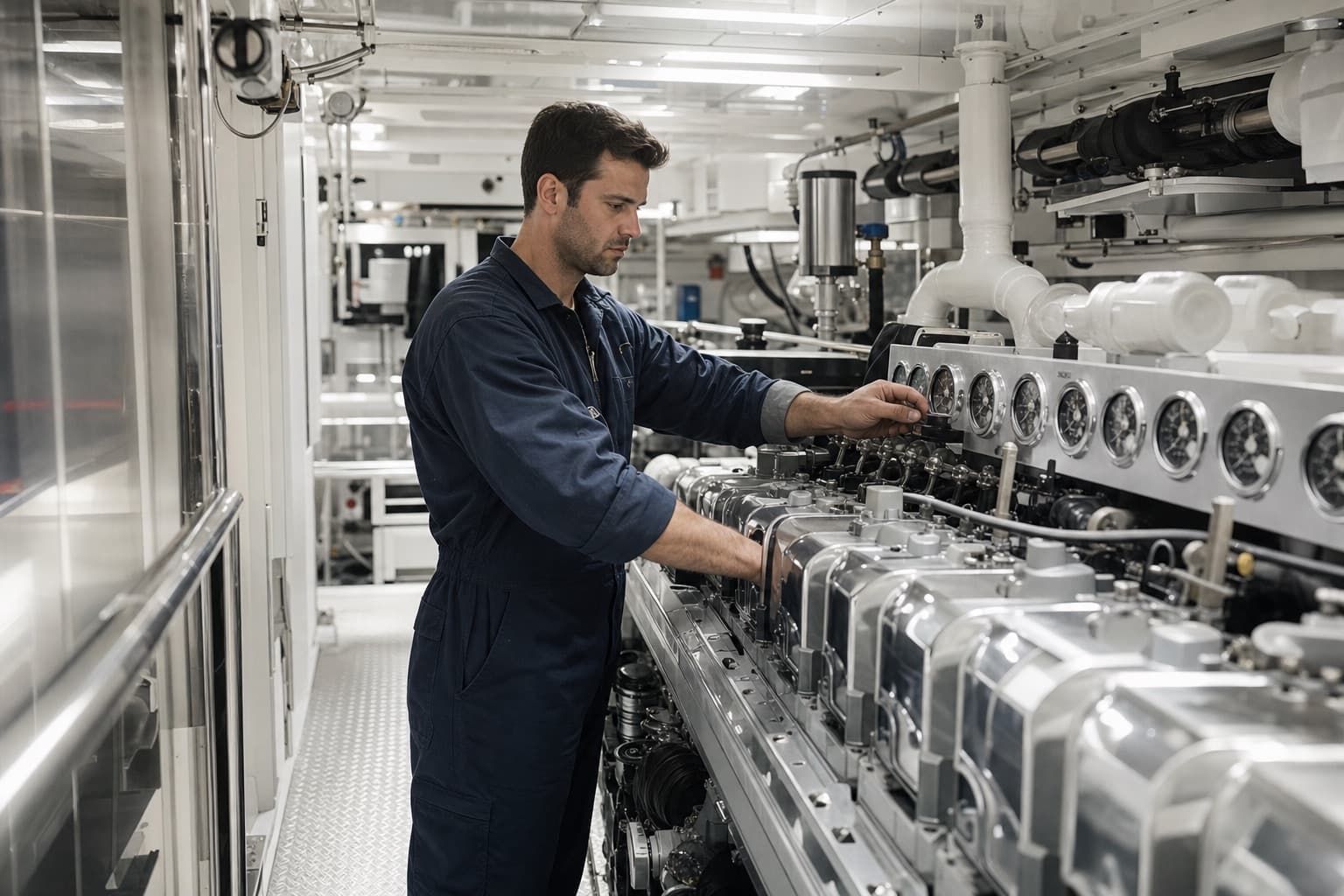
An Engineering Cadet is a trainee engineer placed on a yacht as part of a structured cadetship, usually run with a maritime college or yacht training school. You join a full engineering team and learn by doing: daily rounds, log readings, filter changes, oil samples and fault finding alongside the Second or Third Engineer. Sea time and logged tasks count towards your first certificate, so the job is part work, part apprenticeship.
Most of the work is hands on and often hot, noisy and dirty. You help service generators, watermakers, sewage plants, air conditioning chillers, stabilisers and tenders. You learn the planned maintenance system, how to permit a job safely and how to isolate equipment. When guests are aboard you also answer cabin calls for a blocked shower or a noisy fan, and you learn to fix it quickly and quietly.
Between jobs you keep a training record book that your Chief Engineer signs off, and you return to college for phases of study and exams. Yachts that take cadets tend to be 50m and above, with enough engineers to supervise you properly. A good cadet turns up early, asks questions, keeps the workshop tidy and writes everything down. That record, plus sea time, is what moves you on to Junior Engineer.
What makes a good one
- Mechanical aptitude and tool handling
- Safe working and isolation procedures
- Accurate log and record keeping
- Willingness to learn and take instruction
- Tidy, quiet work in guest areas
A day in the life

- 07:00Morning rounds with the duty engineer. You take generator and shaft readings, check bilges and sound the fuel and fresh water tanks.
- 08:00Team meeting in the engine control room. The Chief Engineer runs through the day's maintenance, guest plans and any overnight alarms.
- 08:30Planned maintenance on a generator under supervision. You change the fuel filters, take an oil sample and record it in the maintenance system.
- 10:30Help the deck team prepare the tender and jet skis. You check fuel, oil and kill cords before the guests head to the beach.
- 12:30Crew lunch, then a quick clean down of the workshop and a look at the spares that need reordering.
- 13:30Training time. You work through tasks in your record book and the Second Engineer signs off the ones you completed this week.
- 15:00A guest cabin reports the air conditioning is not cooling. You trace it with the Second Engineer to a blocked fan coil filter and clean it.
- 17:00Backflush and clean the watermaker prefilters, then check the sewage treatment plant and log the results.
- 19:30Evening rounds and log entries before handing over to the night duty engineer. You finish once the guests' tender is lifted and secured.
Pay by country
Monthly salary for cadets on yachts of 50m and above, usually quoted in EUR or USD. Some programmes pay a lower training allowance during college phases. Cadets often receive a share of charter tips on charter yachts.
- France and Monaco
- €1,800 – 2,500
- Spain
- €1,800 – 2,500
- Italy
- €1,800 – 2,500
- United Kingdom
- £1,550 – 2,150
- USA (Florida)
- US$2,000 – 2,800
- Caribbean
- US$2,000 – 2,800
- UAE
- AED 7,300 – 10,200
- Australia
- A$3,000 – 4,200
- New Zealand
- NZ$3,300 – 4,600
Required
- STCW Basic Safety Training
- ENG1 medical
- PDSD (Proficiency in Designated Security Duties)
- Enrolment on a recognised engineering cadetship
Recommended
- AEC 1
- AEC 2
- RYA Powerboat Level 2
- Advanced Fire Fighting
- Medical First Aid
- Mechanical or electrical trade qualification
Visas
- Schengen visa
- US B1/B2 or C1/D
- Australian MCV
Where it leads
Engineering Cadet jobs open now
Questions crew ask
Do I need engineering experience to become a cadet?
No, but mechanical aptitude helps a lot. A trade background, a workshop job or time spent fixing engines and motorbikes will make your application stronger.
How long does it take to get my first ticket?
Most cadetships take around two to three years, mixing sea phases and college phases. You finish with the sea time and exams needed for an MCA yacht engineering certificate at the first operational level.
Will I get paid during the cadetship?
Yes, on board you are paid a monthly salary, typically €1,800 to €2,500 on larger yachts. Some programmes pay less or nothing during college phases, so check the terms before you sign.