All roles/Engineering/HVAC Engineer / Technician
Engineering
HVAC Engineer / Technician
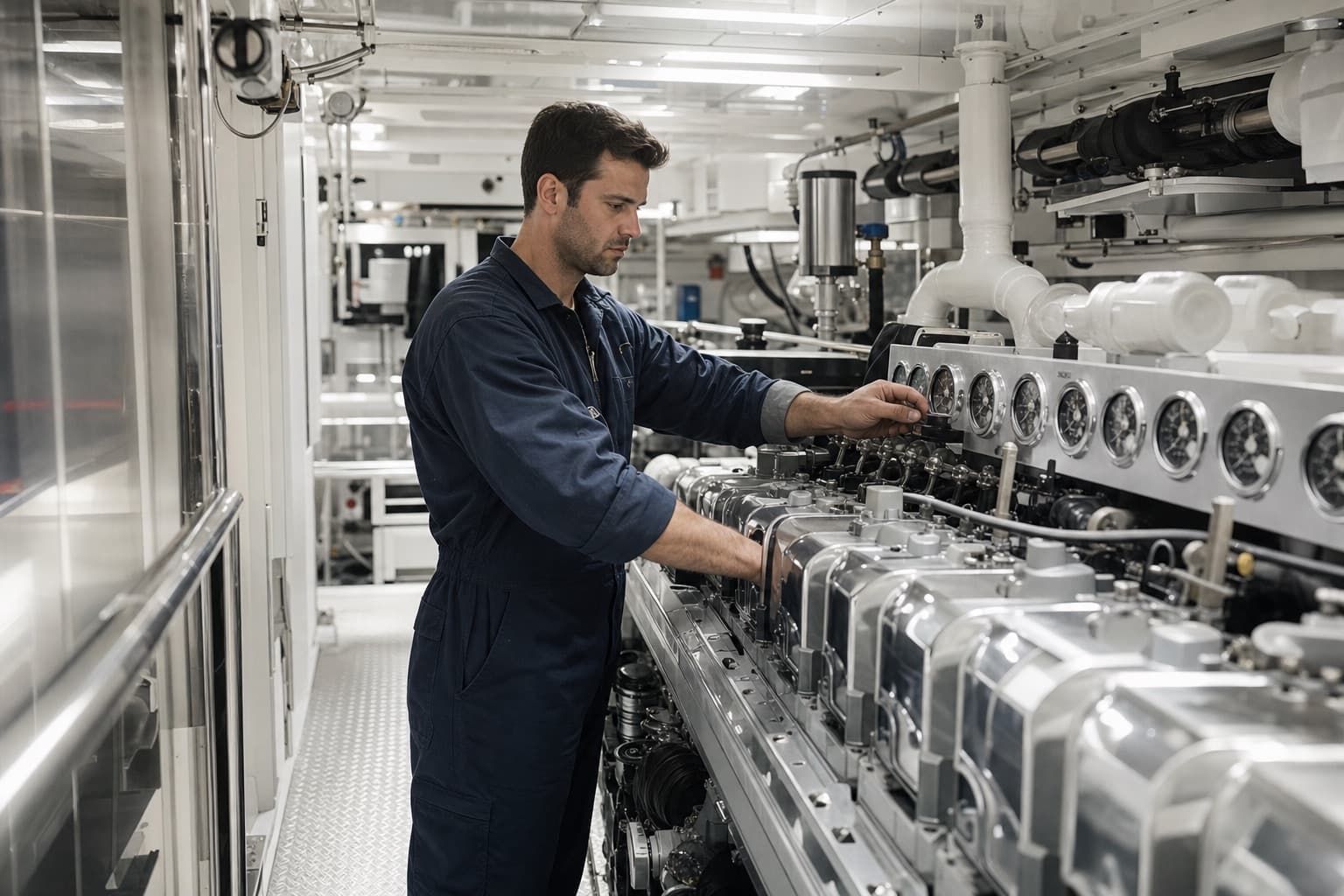
Keeps the air conditioning, chilled water, ventilation and refrigeration plant running on large yachts, so guest cabins stay comfortable, cold stores stay cold and humidity never damages the interior.
- Department
- Engineering
- Reports to
- Chief Engineer
- Yacht size
- 80m+
- Contract
- Permanent or rotation
- Starting pay
- €5,000 per month
What the job is
On a large yacht the HVAC plant is one of the biggest loads after propulsion. You look after the chillers, chilled water loops, air handling units, fan coils, ventilation fans, dehumidifiers and the refrigeration for cold rooms, freezers and galley fridges. Most yachts that carry a dedicated HVAC technician are 80m and above, where the system is too large and too sensitive to leave to the general engineering rota.
The work is part planned maintenance, part fault finding. You clean filters and coils, check refrigerant pressures and superheat, test water treatment, log compressor hours and keep the planned maintenance system up to date. When a guest says a cabin is too warm or a freezer alarms at 02:00, you are the one who finds out why. Leak testing and refrigerant handling must follow F-Gas rules and be recorded properly.
You sit in the engineering department and stand engine room watches or duty rotas like the other engineers. Discretion matters because much of the work happens in guest areas, behind ceiling panels in cabins and saloons. You coordinate with the interior team to access spaces, keep noise down and leave everything clean. Good HVAC technicians usually come from shoreside refrigeration or marine trades and pick up yacht engineering tickets as they go.
What makes a good one
- Chiller and compressor fault finding
- Refrigerant handling and leak testing
- Reading electrical and control schematics
- Planned maintenance record keeping
- Working quietly in guest areas
A day in the life
- 07:00Engineering meeting in the control room with the Chief Engineer. Review overnight alarms, chiller loads and any cabin temperature complaints logged by the interior.
- 07:30Rounds of the chiller room and cold stores. Check compressor pressures, oil levels, chilled water temperatures and the readings on every freezer and cold room.
- 08:30Clean and replace filters on two crew area air handling units while guests are at breakfast on the aft deck. Log the work in the planned maintenance system.
- 10:00A guest cabin is running warm. You coordinate with the Chief Stewardess, access the fan coil above the ceiling panel and find a sticking control valve, which you free and test.
- 12:00Lunch in the crew mess, then a quick check of the galley refrigeration ahead of the chef's dinner prep.
- 13:30Leak test on a provision freezer flagged by a slow temperature rise. Record refrigerant checks in the F-Gas log as required.
- 15:30Sample and test chilled water treatment, adjust dosing and check seawater cooling strainers, which clog faster at anchor in warm water.
- 17:00Order spare filters, contactors and a replacement expansion valve through the technical storekeeper. Update the spares inventory.
- 19:00Evening check of guest deck humidity and temperatures before dinner service, then hand over to the duty engineer and stay on call overnight for HVAC alarms.
Pay by country
Monthly salary for a dedicated HVAC Engineer / Technician on yachts of 80m and above, depending on trade background, refrigeration experience and engineering tickets. Charter yachts add tips, often one to two months' salary over a busy season. Rotation contracts may pay slightly more per working month.
- France and Monaco
- €5,000 – 7,000
- Spain
- €4,800 – 6,800
- Italy
- €4,800 – 6,800
- United Kingdom
- £4,300 – 6,000
- USA (Florida)
- US$5,500 – 7,500
- Caribbean
- US$5,500 – 7,500
- UAE
- AED 20,000 – 28,000
- Australia
- A$8,500 – 11,500
- New Zealand
- NZ$9,500 – 12,500
Required
- STCW Basic Safety Training
- ENG1 medical
- PDSD
- F-Gas certificate (Category I)
- Trade qualification in refrigeration and air conditioning
Recommended
- AEC 1
- AEC 2
- MEOL (Yacht)
- HELM (Operational)
- Advanced Fire Fighting
- Food Safety Level 2
Visas
- Schengen
- US C1/D
- US B1/B2
- Australian MCV
Where it leads
- Refrigeration Engineer
- HVAC Engineer / Technician
- Third Engineer
- Second Engineer
- First Engineer
- Chief Engineer
HVAC Engineer / Technician jobs open now
Questions crew ask
Do I need a yacht engineering ticket to get hired?
Not usually. Captains and Chief Engineers hire this role for trade skill, so a refrigeration qualification, F-Gas certificate and shoreside or marine HVAC experience matter more than a Y4 at the start.
Can I move into the main engineering ladder from HVAC?
Yes. Many HVAC technicians take AEC 1 and 2, then MEOL (Yacht) and the Y4, and move into Third Engineer roles with a strong refrigeration background that Chief Engineers value.
Will I only work on air conditioning?
Mostly HVAC and refrigeration, but you are part of the engineering team. Expect watches, help with bunkering, general maintenance and yard period work alongside the other engineers.