All roles/Engineering/Mechanical Technician
Engineering
Mechanical Technician
Keeps the main engines, generators, hydraulics and deck machinery working on large yachts, carrying out planned maintenance and repairs so the boat stays safe, quiet and ready for guests.
- Department
- Engineering
- Reports to
- Chief Engineer
- Yacht size
- 70m to 150m+
- Contract
- Permanent or rotation
- Starting pay
- €3,500 per month
What the job is
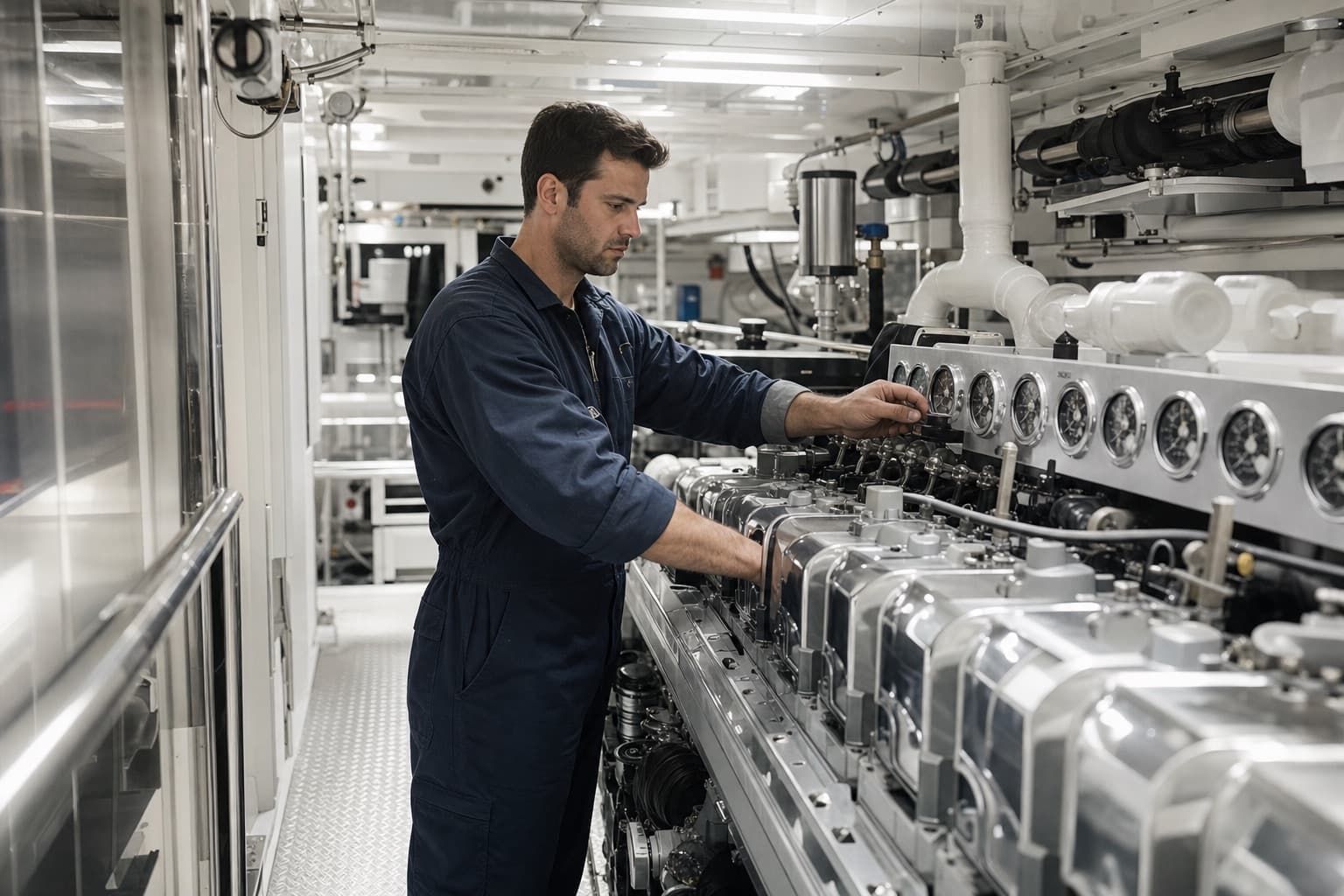
A Mechanical Technician is a practical engineer on a large yacht, usually 70m and above, where the engine department is big enough to carry a specialist. You keep the machinery working: main engines, generators, pumps, compressors, hydraulics, stabilisers, cranes, davits and the tender garage doors. Most come from a shoreside trade such as diesel fitting, plant maintenance or industrial hydraulics, and the role lets that skill transfer straight to sea without first holding a watchkeeping ticket.
Your week runs on the planned maintenance system. The Chief or Second Engineer issues jobs, and you strip, inspect, rebuild and record them: injector overhauls, pump seals, sea water strainers, watermaker membranes, hydraulic hoses on the passerelle. You also take the breakdowns nobody planned for, often with guests on board, so you learn to work quietly and quickly in a cramped space. Good notes, accurate part numbers and tidy stores matter as much as the spanner work.
The job suits someone who likes fixing things properly more than signing off watches. Many technicians use it as a route onto the yacht engineering ladder, studying for AEC and Y4 between contracts while building sea time. Others stay specialists and move between large yachts and refit yards, where their trade is always in demand. Expect long days in refit and shipyard periods, and a calmer rhythm at anchor when the engine room settles into routine.
What makes a good one
- Diesel engine and generator overhaul
- Hydraulic fault finding
- Pump and valve rebuilds
- Accurate maintenance records
- Working cleanly in tight spaces
A day in the life

- 07:00Morning engine room rounds with the duty engineer. Check generator oil and coolant levels, bilges, sea chests and the hydraulic power pack.
- 07:45Engineering meeting in the control room. The Second Engineer runs through the day's maintenance jobs and the guest programme for the tender and toys.
- 08:30Clean and inspect the sea water strainers on the standby generator, then log the job and hours in the planned maintenance system.
- 10:00Deck crew report a slow davit. Trace it to a sticking valve on the hydraulic block, swap the cartridge and test it before the guests want the tender.
- 12:30Lunch in the crew mess, then a quick stores check to order seals and filters with the Technical Storekeeper before the next port.
- 13:30Overhaul a fresh water pressure pump in the workshop. Replace the mechanical seal and bearings, refit it quietly so guest cabins above are not disturbed.
- 16:00Help the Chief Engineer change watermaker membranes and record pressures and output before and after.
- 18:00Evening rounds, top up the day tank log and clean the workshop. Brief the night watch on anything left running.
- 19:30Off duty unless called. You stay on the callout list for anything mechanical overnight.
Pay by country
Monthly crew salary on 70m+ yachts, usually paid in EUR or USD. Charter yachts add tips, often one to two months' pay per season. Rotation roles sit at the top of the range.
- France and Monaco
- €3,500 – 5,000
- Spain
- €3,500 – 5,000
- Italy
- €3,500 – 5,000
- United Kingdom
- £3,000 – 4,300
- USA (Florida)
- US$3,800 – 5,500
- Caribbean
- US$3,800 – 5,500
- UAE
- AED 14,000 – 20,000
- Australia
- A$5,800 – 8,300
- New Zealand
- NZ$6,400 – 9,100
Required
- STCW Basic Safety Training
- ENG1 medical
- PDSD
- Recognised mechanical trade qualification
Recommended
- AEC 1 and 2
- MEOL (Yacht)
- MCA Y4
- Advanced Fire Fighting
- Hydraulics training
- Coded welding certificate
Visas
- Schengen
- US B1/B2
- C1/D
- Australian MCV
Where it leads
Mechanical Technician jobs open now
Questions crew ask
Do I need an MCA engineering ticket to get hired?
No. Captains hire Mechanical Technicians for their trade skills, so a recognised mechanical qualification and shoreside experience count for more. Studying for AEC and Y4 later helps you move up.
Will my background as a car mechanic be enough?
It helps, but marine and heavy diesel, plant or hydraulic experience is what most Chief Engineers look for. Short courses in marine diesels and hydraulics close the gap.
Do Mechanical Technicians stand watches?
Sometimes. On many yachts you join engine room rounds and a callout rota under the duty engineer, but you are not the certified watchkeeper.